
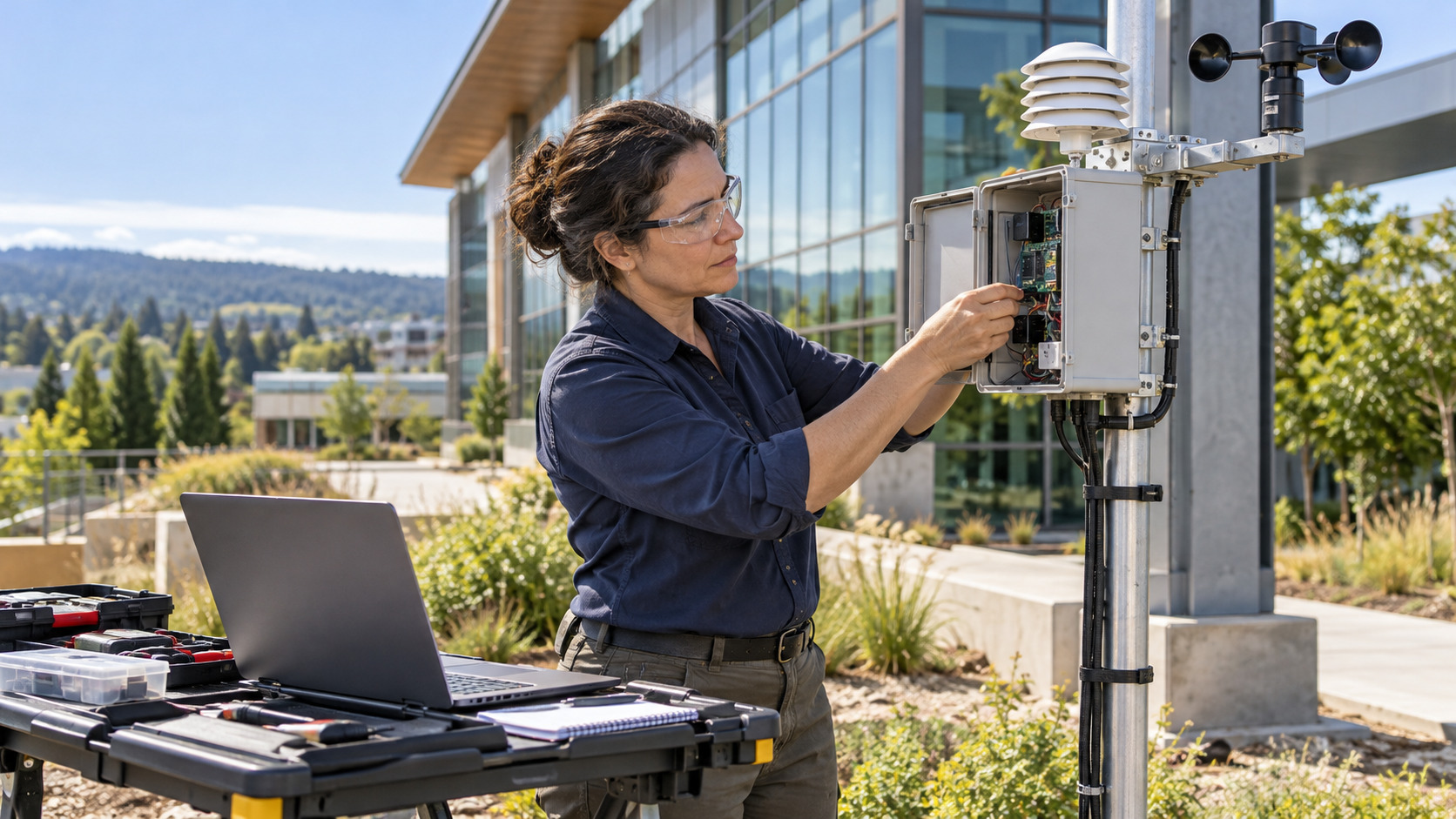
A Bachelor’s degree in Electrical and Computer Engineering (ECE) offers a robust foundation, extending far beyond theoretical concepts learned in lecture halls. It equips you with a versatile toolkit, enabling you to design, analyze, and implement solutions across a spectrum of industries. This degree isn’t just about understanding how things work; it’s about actively shaping the technological landscape that underpins modern society. From the microchip in your smartphone to the vast electrical grids powering our cities, ECE graduates are the architects of the digital and electronic world.
Key Takeaways
- ECE skills support work across chip design, communications, renewable energy, industrial automation, and medical technology.
- Hardware–software integration connects sensors and circuits to embedded control, data processing, and AI applications.
- Engineering work involves testing and validation as well as design, and often requires collaboration with specialists in other disciplines.
The Foundational Pillars of ECE
At its core, ECE is a blend of two distinct yet interconnected disciplines. Electrical engineering often focuses on the macroscopic – power generation and transmission, control systems, and large-scale electronics. Computer engineering, on the other hand, delves into the microscopic – microprocessors, embedded systems, and software-hardware interaction. However, in practice, these lines frequently blur, creating a powerful synergy.
Bridging the Hardware-Software Divide
Modern engineering problems rarely exist in isolation. An ECE degree trains you to navigate this complex interplay, understanding how software interacts with physical components and vice-versa. This dual perspective is invaluable in an era defined by intelligent systems and interconnected devices.
The Digital Canvas: Shaping the Information Age
The information age, as we know it, is largely a creation of ECE principles. From the initial conceptualization of digital logic to the development of sophisticated networks, ECE professionals have been instrumental.
Microelectronics and Integrated Circuits
Consider the smartphone in your pocket. It’s a testament to the continuous miniaturization and increased complexity of integrated circuits (ICs). ECE graduates are at the forefront of designing these tiny powerhouses, pushing the boundaries of Moore’s Law.
From Transistors to Teraflops
The journey from individual transistors to multi-core processors running at teraflop speeds is a story of meticulous design and innovation. You, as an ECE graduate, might be involved in:
- Circuit Design: Crafting the intricate pathways within an IC to perform specific functions, from memory units to central processing units.
- Fabrication Process: Understanding the complex manufacturing steps involved in creating these chips, often working with semiconductor foundries.
- Testing and Validation: Ensuring the reliability and performance of new microchips before mass production, identifying and rectifying any flaws.
Telecommunications and Networking
The ability to communicate instantly across vast distances is a cornerstone of modern life. ECE plays a critical role in developing and maintaining the infrastructure that supports this global exchange of information.
Connecting the World, One Packet at a Time
Imagine data as a stream of water. ECE professionals design the pipes, valves, and pumps that efficiently move this data from one point to another. Your contributions could include:
- Wireless Communication: Developing protocols and hardware for technologies like 5G, Wi-Fi, and satellite communication, enabling seamless connectivity.
- Network Architecture: Designing the layout and operational principles of local area networks (LANs), wide area networks (WANs), and the internet itself.
- Signal Processing: Filtering, amplifying, and interpreting the electromagnetic waves that carry our voice and data, ensuring clarity and integrity.
Powering Tomorrow: Energy Systems and Control
Beyond the digital realm, ECE is fundamental to the generation, transmission, and utilization of electrical power – the lifeblood of industrial and domestic activities.
Renewable Energy Integration
The global push towards sustainable energy sources places ECE graduates in a pivotal position. Integrating intermittent sources like solar and wind into existing grids requires sophisticated engineering solutions.
Harnessing the Sun and Wind
Think of the electrical grid as a complex circulatory system. Renewable energy sources are like new organs being integrated. ECE graduates are the surgeons, ensuring a smooth and efficient integration by:
- Smart Grid Development: Designing intelligent systems that monitor and manage electricity distribution, optimizing efficiency and accommodating fluctuating power sources.
- Power Electronics: Developing converters and inverters that transform the variable output of solar panels and wind turbines into usable AC power for the grid.
- Energy Storage Solutions: Working on battery technologies and other storage systems to balance supply and demand in renewable energy grids.
Industrial Automation and Control Systems
From robotic manufacturing lines to automated climate control in buildings, ECE underpins the precision and efficiency of modern industrial processes.
Orchestrating Machines
Consider a symphony orchestra. Control systems are the conductor, ensuring that each instrument (machine) plays its part at the right time and in the right way. Your role could involve:
- Robotics: Designing and programming industrial robots for tasks ranging from assembly to hazardous material handling.
- Process Control: Developing feedback loops and algorithms to precisely regulate variables like temperature, pressure, and flow in industrial plants.
- Embedded Systems: Designing specialized computer systems that are integrated into larger devices, from washing machines to spacecraft, providing intelligence and control.
The Brains Behind the Machine: Artificial Intelligence and Machine Learning
The rapid advancements in Artificial Intelligence (AI) and Machine Learning (ML) are deeply intertwined with ECE. These fields rely on powerful hardware and efficient algorithms to process vast amounts of data.
Hardware Acceleration for AI
While often considered a software domain, the performance of AI algorithms is heavily dependent on specialized hardware. ECE graduates are crucial in developing these enabling technologies.
Building the AI Engine
If AI is the car, ECE engineers are building the engine. They focus on:
- GPU Design: Optimizing graphical processing units (GPUs) and other specialized accelerators for parallel computation, essential for training and running complex AI models.
- Neuromorphic Computing: Exploring new computing architectures inspired by the human brain, aiming for more energy-efficient and powerful AI hardware.
- Edge AI Devices: Designing low-power, compact systems that can perform AI tasks directly on devices without relying on cloud computing, enabling smart sensors and IoT applications.
Data Acquisition and Processing
AI and ML thrive on data. ECE professionals are involved in the entire pipeline, from sensing the physical world to preparing data for algorithmic analysis.
From Raw Data to Actionable Insights
Imagine data as raw ore. ECE expertise is needed to mine it, refine it, and shape it into something valuable. This involves:
- Sensor Design: Developing intelligent sensors that accurately capture environmental data, from images and sound to chemical compositions.
- Signal Conditioning: Processing raw sensor data to remove noise and extract meaningful features, making it suitable for ML algorithms.
- Data Communication: Designing robust systems to transmit large volumes of data efficiently from sensors to processing units.
Human-Computer Interaction and Beyond
ECE extends its influence into areas that directly impact how humans interact with technology, shaping intuitive interfaces and immersive experiences.
Biomedical Engineering
The intersection of ECE and medicine has led to groundbreaking innovations that improve human health and quality of life.
Engineering for Wellness
Think of ECE as a bridge between engineering principles and the complexities of the human body. Your contributions could include:
- Medical Imaging: Developing advanced techniques for MRI, CT scans, and ultrasound, providing clearer insights into the human anatomy.
- Prosthetics and Implants: Designing intelligent prosthetic limbs and implantable devices (e.g., pacemakers, cochlear implants) that restore function and improve patient outcomes.
- Wearable Health Monitors: Creating devices that continuously track vital signs, detect anomalies, and provide personalized health insights.
Virtual and Augmented Reality
The burgeoning fields of Virtual Reality (VR) and Augmented Reality (AR) rely heavily on ECE for their core technologies.
Crafting Immersive Worlds
VR and AR are like portals to other realities, and ECE engineers are building these portals. This involves:
- Display Technologies: Developing high-resolution, low-latency displays that create convincing virtual environments and seamlessly overlay digital information onto the real world.
- Sensor Fusion: Integrating data from multiple sensors (e.g., accelerometers, gyroscopes, cameras) to accurately track user movement and position within a virtual space.
- Haptics: Designing feedback systems that simulate touch and force, enhancing the immersive experience and making virtual interactions feel more real.
Lifelong Learning: A Continuous Journey
The world of ECE is in a constant state of flux. New technologies emerge, paradigms shift, and the problems we seek to solve become increasingly complex. A Bachelor’s degree is not an endpoint but a strong starting gate for a career of continuous learning and adaptation.
Adapting to Emerging Technologies
Your ECE education provides you with the fundamental principles – the underlying physics, mathematics, and computational logic – that remain relevant even as specific technologies evolve. This foundation enables you to quickly grasp and master new tools and methodologies.
Staying Ahead of the Curve
Imagine sailing a ship in uncharted waters. Your ECE degree provides the navigational charts and the understanding of currents. But you’ll always need to observe the changing winds and adjust your sails. This involves:
- Professional Development: Attending conferences, workshops, and pursuing advanced certifications to stay current with industry best practices.
- Online Learning: Utilizing platforms that offer specialized courses in emerging fields like quantum computing, advanced robotics, or ethical AI.
- Independent Research: Cultivating a curiosity to explore new areas and conduct personal projects, deepening your understanding and skills.
The Interdisciplinary Nature of Modern Engineering
Few engineering problems today exist in a silo. ECE graduates often find themselves collaborating with mechanical engineers, software developers, material scientists, and even designers and business professionals. Your ability to communicate effectively across disciplines and understand diverse perspectives will be a significant asset.
The Confluence of Expertise
Think of a grand construction project. It requires architects, builders, plumbers, electricians, and more. Modern engineering is similar, and ECE often acts as the central nervous system, connecting and coordinating different elements. Your ECE degree positions you to:
- Lead Technical Teams: Guiding projects that integrate hardware and software components, managing complex interdependencies.
- Innovate Across Domains: Applying ECE principles to challenges in seemingly unrelated fields, from finance to environmental science.
- Bridge the Gap Between Theory and Practice: Translating abstract scientific concepts into tangible, deployable solutions that address real-world needs.
In conclusion, a Bachelor’s in Electrical and Computer Engineering is more than a qualification; it’s a passport to a world of innovation and impact. It equips you not just with knowledge, but with a problem-solving mindset and the ability to contribute meaningfully to the technological advancements that define our era. The real-world applications are vast and ever-expanding, offering a dynamic and rewarding career path for those willing to embrace continuous learning and critical thinking.


