
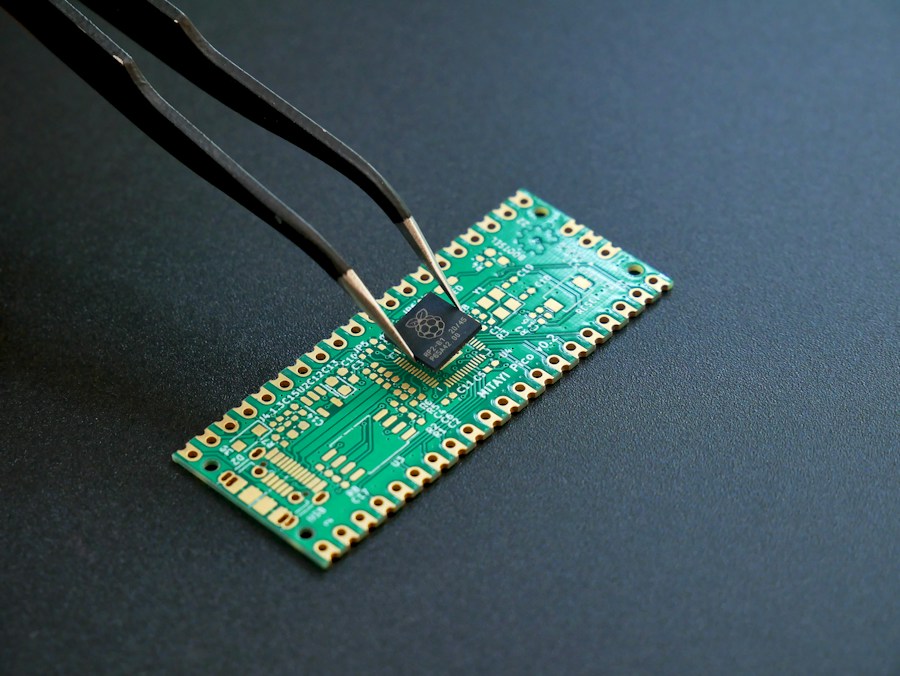
If you’re considering a Bachelor of Science in Electrical and Computer Engineering (ECE), you’ve likely encountered the term “concentrations.” These are essentially specialized tracks within the broader ECE degree, allowing you to dive deeper into specific areas of the field. Think of the ECE degree as a sturdy foundation, and concentrations as specialized wings you can build upon it, each offering a unique view of the engineering landscape.
Key Takeaways
- Common ECE concentrations include power systems, communications and signal processing, computer engineering, electronics, and electromagnetics.
- Each track emphasizes different tools: for example, power conversion and grid integration, signal algorithms, or hardware description and chip design.
- Check the actual university catalog because concentration names, courses, and combinations vary by program.
Choosing a concentration is a significant step, shaping your coursework, projects, and ultimately, your career trajectory. This article will guide you through some of the most common concentrations you’ll find within a B.S. in ECE program, explaining what each entails and what kinds of skills and knowledge you’ll acquire.
Power Systems Engineering
This concentration is all about the generation, transmission, distribution, and utilization of electrical energy. If you’re fascinated by how electricity gets from power plants to your wall socket, or the complex grids that keep our world running, this is the path for you. Power systems engineers are the architects and custodians of our energy infrastructure.
Power Generation and Renewable Energy
This area focuses on the methods used to produce electricity. You’ll learn about traditional sources like fossil fuels and nuclear power, but increasingly, the emphasis is on renewable sources such as solar, wind, hydroelectric, and geothermal energy. This involves understanding the principles behind these technologies, their integration into existing grids, and the challenges associated with their intermittency.
Photovoltaic Systems
You’ll delve into the physics and engineering of solar panels, exploring how sunlight is converted into electricity. This includes material science, semiconductor physics, and the design of solar arrays.
Wind Turbine Technology
Understanding the aerodynamics of wind turbines, their mechanical design, and the electrical systems that capture and transmit the generated power will be key.
Grid Integration of Renewables
This is a crucial area, examining how to reliably incorporate intermittent renewable sources into the existing power grid without compromising stability.
Power Electronics and Drives
Here, you’ll explore the conversion and control of electrical power using solid-state devices. This is essential for applications ranging from efficient power supplies in electronics to variable-speed electric motors.
AC/DC and DC/DC Converters
You’ll learn the design and analysis of circuits that change the voltage and current characteristics of electrical power. This is fundamental to many modern electronic devices.
Electric Motor Control
This involves understanding how to precisely control the speed and torque of electric motors, critical for everything from electric vehicles to industrial automation.
Smart Grids and Energy Management
This is a more modern and rapidly evolving area. Smart grids leverage digital communication technologies to monitor, control, and optimize the flow of electricity in real-time. Energy management involves efficient use and conservation of power.
Demand-Side Management
This focuses on influencing electricity consumption patterns to improve grid efficiency and reliability.
Energy Storage Systems
Understanding various battery technologies, their integration into the grid, and their role in stabilizing renewable energy sources.
Communications and Signal Processing
This concentration is concerned with the transmission, reception, and manipulation of information signals. If you’re intrigued by how your phone connects to the internet, how radio waves carry music, or how sophisticated algorithms can extract meaningful data from noisy signals, this is likely your area.
Digital Communications
This sub-field deals with the principles and techniques for transmitting information digitally. It’s the backbone of our interconnected world.
Modulation and Demodulation Techniques
You’ll learn how to encode information onto carrier waves for transmission and how to retrieve it at the receiver. This includes Amplitude Modulation (AM), Frequency Modulation (FM), and more advanced digital techniques.
Error Correction Codes
Understanding how to add redundancy to transmitted data to detect and correct errors that occur during transmission is vital for reliable communication.
Wireless Communication Systems
This involves the design and analysis of systems like Wi-Fi, cellular networks (4G, 5G), and satellite communications.
Signal Processing
Signal processing is about analyzing, modifying, and synthesizing signals. This can be audio, image, video, or any other type of data that can be represented as a signal.
Digital Signal Processing (DSP)
You’ll learn about algorithms and hardware for processing digital signals, essential for audio and image editing, speech recognition, and medical imaging.
Image and Video Processing
This area focuses on manipulating and analyzing visual information, including techniques for image enhancement, compression, and object recognition.
Audio Signal Processing
Understanding how to process sound signals, from noise reduction to speech synthesis, is a core part of this.
Information Theory and Coding
This is a more theoretical aspect, dealing with the fundamental limits of data compression and communication.
Data Compression Algorithms
Learning how to reduce the amount of data needed to represent information without significant loss of quality.
Channel Capacity
Understanding the maximum rate at which information can be reliably transmitted over a noisy communication channel.
Computer Engineering
This concentration bridges the gap between electrical engineering and computer science, focusing on the design and development of computer hardware and software systems. If you’re interested in how computers are built, how they operate at a fundamental level, and how hardware and software interact, this is the field for you.
Computer Architecture and Organization
This area delves into the design of the internal structure and operation of computers. You’ll understand how processors, memory, and input/output devices work together.
Microprocessor Design
Learning the principles behind designing central processing units (CPUs), including instruction sets, pipelining, and cache memory.
Memory Systems
Understanding different types of memory (RAM, ROM, cache) and how they are organized and accessed.
Parallel and Distributed Computing Architectures
Exploring how to design systems that can perform multiple computations simultaneously, crucial for high-performance computing.
Embedded Systems Design
Embedded systems are specialized computer systems designed for a particular function within a larger mechanical or electrical system. They are everywhere, from your microwave to your car’s engine control unit.
Real-Time Operating Systems (RTOS)
Learning how to develop software for systems where timing is critical.
Hardware/Software Co-design
Understanding how to design both the hardware and software components of an embedded system concurrently for optimal performance.
Internet of Things (IoT) Devices
Designing and programming the small, connected devices that make up the Internet of Things.
VLSI (Very Large-Scale Integration) Design
VLSI is the process of creating integrated circuits (ICs), or microchips, by combining thousands or millions of transistors onto a single silicon chip.
Digital and Analog Circuit Design
You’ll learn to design the logic gates, memory cells, and other circuits that form the building blocks of ICs.
Semiconductor Fabrication Processes
Gaining an understanding of the complex manufacturing processes involved in creating microchips.
Hardware Description Languages (HDLs)
Mastering languages like Verilog and VHDL, used to describe and design digital circuits.
Electronics and Circuits
This concentration focuses on the fundamental design and analysis of electronic circuits. It’s the bedrock upon which many other ECE specializations are built. If you enjoy working with transistors, resistors, capacitors, and understanding how they interact to perform specific functions, this is your domain.
Analog Circuit Design
This involves designing circuits that process continuous electrical signals, such as amplifiers, filters, and oscillators.
Operational Amplifiers (Op-Amps)
Understanding the behavior and applications of these versatile building blocks in analog circuit design.
Filter Design
Learning how to design circuits that selectively pass or block certain frequencies, essential in audio, radio, and many other applications.
Oscillator Design
Creating circuits that generate periodic electronic signals, used in clocks, radios, and communication systems.
Mixed-Signal Circuit Design
This area combines both analog and digital circuit design techniques. Many modern systems require interfaces that convert between analog and digital signals.
Analog-to-Digital Converters (ADCs) and Digital-to-Analog Converters (DACs)
Designing circuits that perform these crucial signal conversions.
Phase-Locked Loops (PLLs)
Understanding how to synchronize signals, a key component in many communication and timing applications.
Microelectronics and Semiconductor Devices
This sub-field delves into the physics and behavior of semiconductor devices, the fundamental components of all modern electronics.
Transistor Theory and Fabrication
Understanding the operation of MOSFETs, BJTs, and other transistors, as well as the processes used to create them.
Device Physics
Exploring the quantum mechanical principles that govern the behavior of electrons in semiconductor materials.
Integrated Circuit Fabrication
Learning about the steps involved in manufacturing integrated circuits, from silicon wafer preparation to packaging.
Electromagnetics and Antennas
This concentration explores the behavior of electric and magnetic fields and their interaction with matter. If you’re drawn to the invisible forces that govern wireless communication, radar, and other wave-based technologies, this is the area for you.
Electromagnetic Theory
This is the foundational study of electricity and magnetism as unified phenomena.
Maxwell’s Equations
Understanding these fundamental equations that describe how electric and magnetic fields are generated and interact.
Wave Propagation
Analyzing how electromagnetic waves travel through different media, from free space to waveguides.
Transmission Lines
Studying how electrical signals are transmitted along conductors, crucial for high-frequency circuits and signal integrity.
Antennas and Radiating Systems
This specialization focuses on the design, analysis, and application of antennas, devices that convert electrical signals into electromagnetic waves and vice versa.
Antenna Theory and Design
Learning about different antenna types (dipole, monopole, horn, parabolic) and how to design them for specific applications.
Radiation Patterns
Understanding how antennas transmit and receive energy in different directions.
Antenna Arrays
Designing systems of multiple antennas to achieve specific radiation characteristics, used in radar and telecommunications.
RF (Radio Frequency) and Microwave Engineering
This area deals with electronic circuits and systems that operate at radio frequencies and microwave frequencies.
RF Circuit Design
Designing amplifiers, filters, mixers, and other components for radio and microwave systems.
Microwave Propagation and Components
Understanding how signals behave at these high frequencies and the specialized components used in microwave systems.
Wireless Communication Systems Design
Applying RF and microwave principles to the design of wireless communication infrastructure.
Choosing a concentration is a journey of discovery. It’s about identifying which aspects of the vast ECE field spark your curiosity the most. Each of these concentrations offers a distinct set of challenges and rewards, preparing you for a wide array of exciting career paths. Remember, these are common pathways, and individual universities may offer variations or combinations of these. Your best bet is always to consult the specific program details for the institution you’re interested in.


