
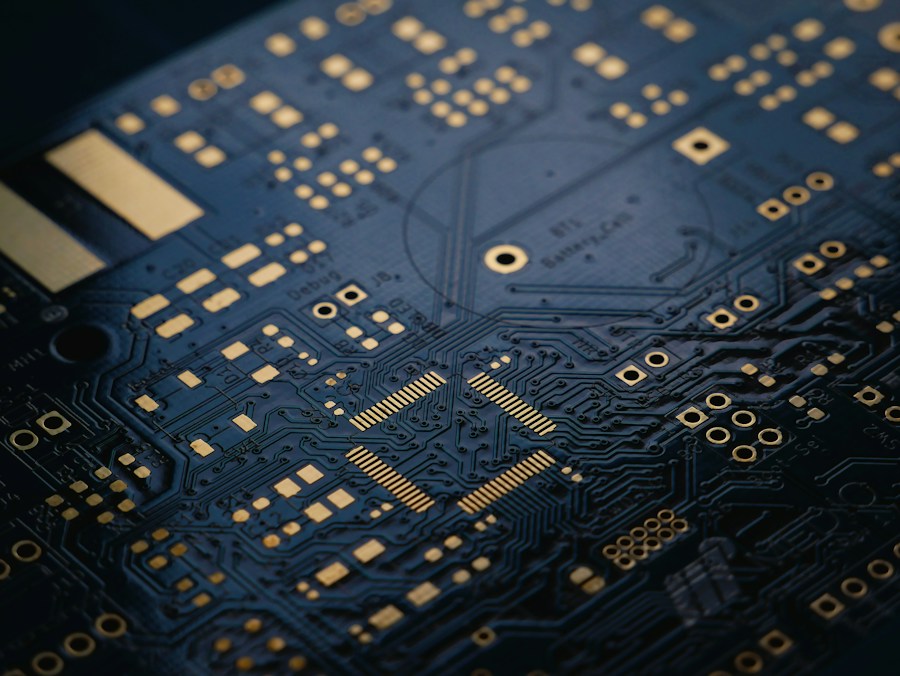
A Bachelor of Science in Electrical and Computer Engineering (B.S. ECE) is an undergraduate degree program that integrates the principles of electrical engineering and computer science. It equips students with a comprehensive understanding of how electrical systems function, from the smallest microchips to large-scale power grids, and how computer hardware and software are designed, developed, and integrated. This dual focus provides graduates with a versatile skill set, enabling them to tackle complex challenges at the intersection of these two critical fields.
Key Takeaways
- A B.S. in electrical and computer engineering combines circuits and electrical systems with computing, programming, and hardware–software integration.
- Calculus, linear algebra, physics, and programming support later work in digital logic, embedded systems, signal processing, and chip design.
- Projects and labs develop design, debugging, technical communication, and teamwork skills alongside the theory.
The Dual Nature of ECE: Electrical Engineering and Computer Science Intertwined
At its core, a B.S. ECE program is a convergence of two distinct yet deeply interconnected disciplines. Imagine it like a braided river, where the currents of electrical engineering and computer science flow together, enriching each other as they progress. Understanding this foundational concept is key to appreciating the depth and breadth of the ECE curriculum.
What is Electrical Engineering?
Electrical engineering is concerned with the study, design, and application of equipment, devices, and systems that use electricity, electronics, and electromagnetism. Think of the invisible forces that power our world.
- Fundamentals of Electricity: This involves understanding basic circuit theory, including Ohm’s Law, Kirchhoff’s Laws, and the analysis of resistive, capacitive, and inductive components. It’s the bedrock upon which all electrical systems are built.
- Electronics: This area delves into the behavior of semiconductors and the design of electronic circuits, from simple amplifiers and filters to complex integrated circuits (ICs) found in every modern device.
- Power Systems: This segment focuses on the generation, transmission, and distribution of electrical power, including renewable energy sources and smart grids. It’s about lighting up our cities and powering our industries.
- Control Systems: This involves designing systems that automatically regulate the behavior of other devices or processes, such as cruise control in a car or temperature control in a building. It’s about making things work predictably and efficiently.
- Telecommunications: This explores the transmission of information over various media, encompassing topics like wireless communication, fiber optics, and network protocols. It’s the invisible highway for our data.
- Electromagnetics: This foundational area covers the principles of electric and magnetic fields and their interaction, crucial for understanding antennas, motors, and electromagnetic compatibility.
What is Computer Science?
Computer science, on the other hand, is the study of computation and information. It’s about how we instruct machines to process information and solve problems.
- Programming and Software Development: This involves learning various programming languages (e.g., Python, C++, Java), understanding data structures and algorithms, and developing software applications. It’s the language we use to speak to computers.
- Computer Architecture: This focuses on the design and organization of computer hardware, including processors, memory, and input/output devices. It’s the blueprint of the machine itself.
- Operating Systems: This explores the software that manages computer hardware and software resources and provides common services for computer programs. It’s the conductor of the computer’s orchestra.
- Networking: This covers the principles of computer networks, including network topologies, protocols (like TCP/IP), and network security. It’s how computers communicate with each other across the globe.
- Database Systems: This involves the design, implementation, and management of structured collections of data. It’s the organized library of digital information.
- Artificial Intelligence and Machine Learning: This emerging field focuses on developing algorithms and systems that can perform tasks typically requiring human intelligence, such as learning, problem-solving, and decision-making. It’s teaching machines to think (or at least simulate thinking).
The Integrated Curriculum: Bridging the Gap
The true power of a B.S. ECE lies in its integrated curriculum. It’s not just two separate degrees mashed together; rather, it’s a thoughtfully designed program that emphasizes the symbiotic relationship between hardware and software. Imagine building a high-performance race car: you need engineers who understand the mechanics of the engine (electrical engineering) and engineers who can program the sophisticated control systems and telemetry (computer science). In ECE, you get to be both.
Core Coursework
Typically, the initial years of an ECE program lay a strong foundation in mathematics, physics, and general engineering principles.
- Calculus and Differential Equations: Essential for analyzing continuous systems and signals.
- Linear Algebra: Crucial for understanding data transformations, signal processing, and graphics.
- Physics (Electricity and Magnetism): Provides the fundamental understanding of electrical phenomena.
- General Chemistry: Often required to understand material properties and semiconductor physics.
- Basic Programming: Introduction to a foundational language like C++ or Python.
Advanced ECE Topics
As you progress, the coursework becomes more specialized, blending electrical and computer engineering concepts.
- Digital Logic Design: Designing circuits using logic gates, leading to an understanding of how microprocessors are built. This is where electrical signals meet computational logic.
- Microcontrollers and Embedded Systems: Programming small, specialized computers that are often integrated into larger systems, like those found in smart appliances or automotive systems. Here, you’re directly bridging hardware and software.
- Signal Processing: Analyzing and manipulating signals, whether they are audio, video, or data, using both electrical circuits and computational algorithms.
- VLSI (Very Large Scale Integration) Design: The process of creating integrated circuits, involving both the electrical layout and the logical functionality. This is the art of crafting microchips.
- Computer Networks and Security: Understanding how data travels across networks and how to protect it, involving both hardware infrastructure and software protocols.
- Robotics: Designing and controlling robots, which inherently requires knowledge of both electrical actuators and sensors, and the software that dictates their behavior.
Career Opportunities: A Broad Horizon
Graduates with a B.S. ECE degree are highly sought after in a wide array of industries. Their unique blend of skills makes them adaptable and capable of tackling diverse technical challenges. The job market often doesn’t neatly separate “electrical” from “computer” roles; instead, many positions require expertise in both.
Traditional Electrical Engineering Roles
While possessing computer science skills, ECE graduates are still well-prepared for roles focused primarily on electrical systems.
- Power Engineer: Designing, developing, and maintaining power grids, renewable energy systems, and industrial power distribution.
- Electronics Design Engineer: Developing circuits for various applications, from consumer electronics to medical devices.
- Controls Engineer: Designing and implementing automated control systems for manufacturing processes, aerospace, or robotics.
- RF (Radio Frequency) Engineer: Working on wireless communication systems, antennas, and microwave circuits.
- Test Engineer: Developing and executing test plans for electrical and electronic systems to ensure quality and functionality.
Traditional Computer Engineering Roles
Their strong foundation in computer science also opens doors to purely computer-focused positions.
- Software Engineer: Developing applications, operating systems, or embedded software for various platforms.
- Hardware Engineer: Designing and developing computer components, such as processors, memory modules, and motherboards.
- Network Engineer: Designing, implementing, and managing computer networks and network infrastructure.
- Systems Engineer: Overseeing the design, integration, and management of complex computer systems.
- Cybersecurity Engineer: Protecting computer systems and networks from threats and vulnerabilities.
Hybrid Roles
The true strength of an ECE degree often shines in roles that require a blend of both disciplines. These are often the most innovative and rapidly evolving areas.
- Embedded Systems Engineer: Designing and programming specialized computer systems that are part of larger devices, such as those in IoT (Internet of Things) devices, automotive systems, or medical equipment.
- Robotics Engineer: Developing the hardware and software for robotic systems, including mechanical design, sensor integration, and control algorithms.
- Firmware Engineer: Writing low-level software that controls hardware devices, bridging the gap between hardware and high-level software.
- ASIC/FPGA Design Engineer: Designing custom integrated circuits (ASICs) or programmable logic devices (FPGAs) for specific computational tasks, requiring deep understanding of both digital logic and hardware description languages.
- Machine Learning Engineer (Hardware Accelerated): Developing and optimizing machine learning algorithms for specialized hardware, like GPUs or custom AI chips.
- IoT (Internet of Things) Engineer: Designing and implementing connected devices, requiring expertise in embedded systems, wireless communication, and cloud integration.
Essential Skills Developed: More Than Just Technical Knowledge
Beyond the specific technical knowledge, a B.S. ECE program cultivates a suite of critical thinking and problem-solving skills that are invaluable in any professional setting. Think of these as the tools in your mental toolkit, allowing you to approach challenges effectively.
Analytical and Problem-Solving Skills
You will learn to break down complex problems into manageable components, analyze various solutions, and implement the most effective one. This often involves:
- Logical Reasoning: Developing a systematic approach to thinking through problems.
- Debugging: Identifying and resolving errors in both hardware and software systems.
- Data Analysis: Interpreting data to make informed decisions and optimize system performance.
Design and Innovation
ECE encourages a creative approach to engineering, fostering the ability to design novel solutions.
- Systems Thinking: Understanding how individual components interact within a larger system.
- Prototyping: Building and testing preliminary versions of designs.
- Optimization: Improving existing designs for efficiency, cost, or performance.
Programming and Software Development
A strong emphasis on programming is a given, developing proficiency in various languages and methodologies.
- Algorithm Design: Creating efficient step-by-step procedures to solve computational problems.
- Software Engineering Principles: Understanding best practices for developing robust, maintainable, and scalable software.
- Version Control: Collaborating on code projects effectively using tools like Git.
Hardware and Circuit Design
You’ll gain practical experience in designing and implementing electronic circuits.
- Circuit Simulation: Using software tools to model and test circuit behavior before physical implementation.
- PCB Layout: Designing printed circuit boards for electronic components.
- Instrumentation: Using oscilloscopes, multimeters, and other equipment to test and troubleshoot hardware.
Communication and Teamwork
Engineering projects are rarely solitary endeavors. ECE programs emphasize collaboration and clear communication.
- Technical Writing: Documenting designs, experiments, and project outcomes.
- Presentation Skills: Clearly articulating technical concepts to both technical and non-technical audiences.
- Collaboration: Working effectively in teams to achieve common goals.
Is a B.S. ECE Right for You? Self-Reflection and Future Prospects
Deciding on a major is a significant choice. A B.S. ECE is a rigorous and rewarding path, but it’s not for everyone. It demands dedication, a strong aptitude for mathematics and science, and a genuine curiosity about how technology works at its fundamental levels.
Key Considerations
- Passion for Problem Solving: Do you enjoy dissecting problems and figuring out solutions, even when they are complex?
- Aptitude for Math and Science: Do you generally excel in calculus, physics, and logic? These subjects form the backbone of the curriculum.
- Interest in Both Hardware and Software: Are you intrigued by how a computer physically works and how we program it to perform tasks? If you’re solely interested in one over the other, a specialized degree in electrical engineering or computer science might be a better fit.
- Continuous Learning: The fields of electrical and computer engineering evolve rapidly. Are you prepared for a career that requires continuous learning and adaptation?
- Hands-on vs. Theoretical: While there’s a strong theoretical component, ECE often involves hands-on lab work and projects. Do you enjoy building and experimenting?
Future Prospects and Versatility
The versatility of an ECE degree is one of its greatest strengths. It provides a robust foundation that allows you to pivot and adapt as technology advances. If you envision yourself working on the bleeding edge of innovation, whether it’s designing the next generation of AI hardware, developing secure communication systems, or powering sustainable cities, a B.S. ECE provides the intellectual toolkit to do so. It’s a passport to a future where electrical systems and computing are inextricably linked, driving progress across nearly every sector of society.


